How to Set Up Chores So They Actually Stick
Stop resetting your chore system every month. Set it up once, clearly and fairly, so it actually sticks.
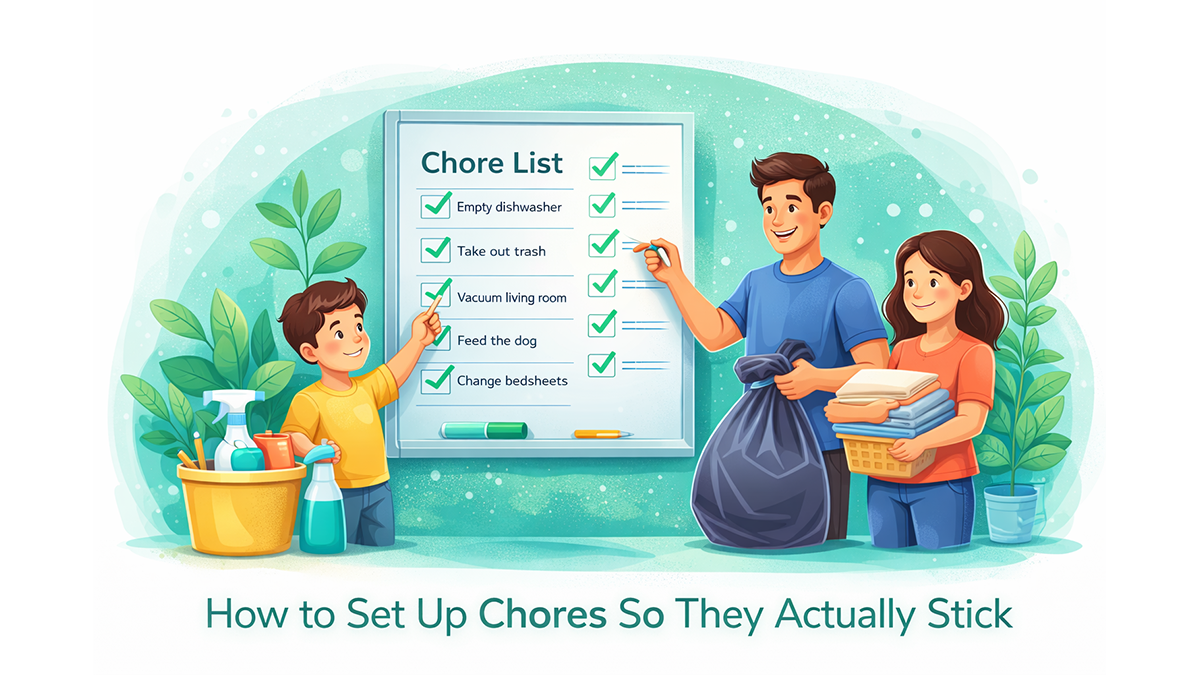
How to Set Up Chores So They Actually Stick
Most households don’t fail at chores because people are lazy.
They fail because the system is unclear, inconsistent, or quietly unfair.
If chores never quite “stick” in your home, it’s usually not about motivation — it’s about structure.
Start with fewer chores than you think
The biggest mistake is trying to organise everything at once.
Instead:
- Start with 5–10 recurring chores
- Focus on the ones that cause the most friction
- Ignore the rest for now
A small system that works beats a perfect system nobody uses.
Make ownership explicit
A chore without an owner is a suggestion.
Every task should answer one clear question: Who is responsible for this being done?
That doesn’t mean they must do it personally — just that they own the outcome.
Avoid:
- “Someone needs to…”
- “We should probably…”
- “Can you help with…”
Clarity reduces resentment.
Match chores to real life, not ideal life
If a chore is meant to happen daily, but everyone’s exhausted by 7pm, it won’t last.
Be honest about:
- Energy levels
- Work schedules
- School routines
- Busy vs quiet weeks
A realistic schedule always beats an aspirational one.
Use reminders sparingly but consistently
Reminders aren’t nagging — people nag, systems don’t.
A good rule:
- Important chores → reminders
- Flexible chores → visible lists
- Everything else → optional
Consistency matters more than frequency.
Review, don’t abandon
If a chore stops happening, don’t scrap the system.
Ask:
- Is it too frequent?
- Is the timing wrong?
- Is the owner unclear?
Small adjustments keep systems alive.
The goal isn’t perfection
It’s fewer arguments, less mental load, and fewer things slipping through the cracks.
When chores stick, it’s because the system fits the household — not because everyone suddenly became more disciplined.