Common Mistakes Households Make With Task Sharing
Discover the most common task-sharing mistakes households make — from hidden mental load to unclear responsibility — and how to fix them with better systems.
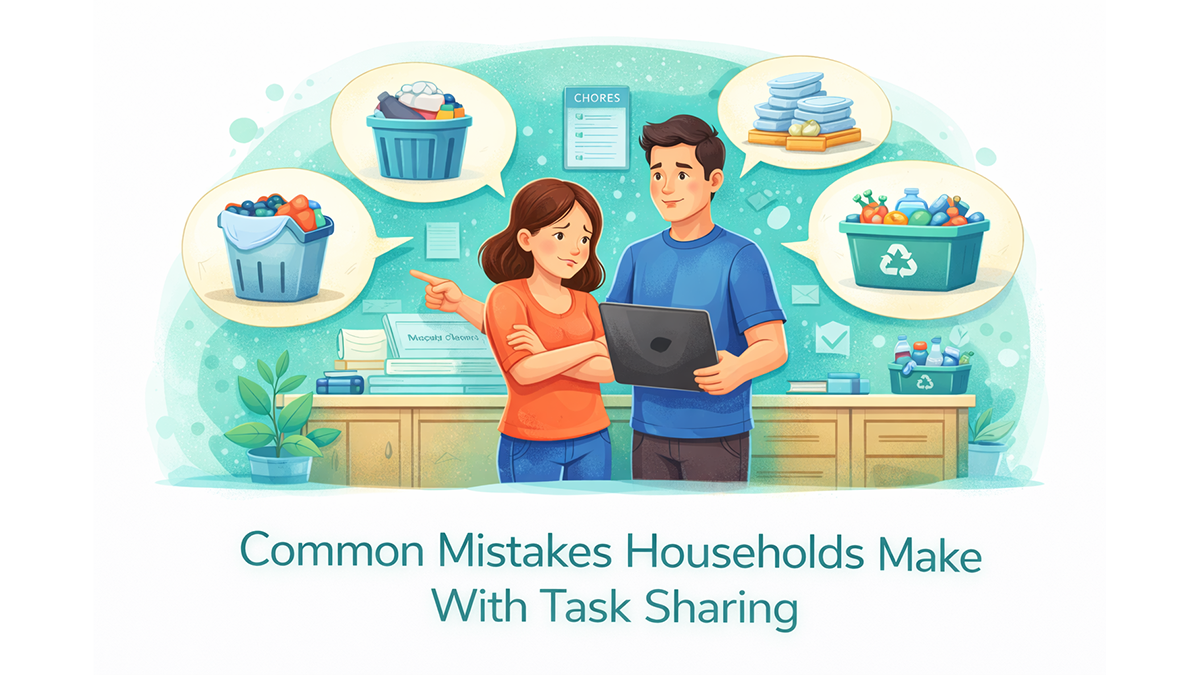
Common Mistakes Households Make With Task Sharing
Most households don’t argue about chores because of the chores themselves.
They argue because of assumptions.
Here are the most common mistakes — and how to avoid them.
Assuming “we both know what needs doing”
This is the fastest way to resentment.
What one person sees as obvious, another genuinely doesn’t notice.
That’s not laziness — it’s human attention.
If a task matters, write it down and assign it.
Confusing help with responsibility
Helping is voluntary. Responsibility is not.
When one person:
- Notices the task
- Remembers it
- Mentally tracks it
- Asks for help
They’re already carrying most of the load.
Shared systems reduce this imbalance.
Overloading one “organised” person
Every household has someone who naturally plans ahead.
That doesn’t mean they should:
- Manage every list
- Chase every task
- Remember everything
Organisation is a skill — not an obligation.
Letting resentment build silently
Unspoken frustration doesn’t disappear. It compounds.
If something feels unfair, it’s better to:
- Adjust the system
- Reassign tasks
- Reduce expectations
Before it becomes an argument.
Treating all tasks as equal
Taking bins out once a week is not the same as managing meals every day.
Some tasks:
- Repeat constantly
- Require planning
- Carry mental load
Fair sharing accounts for effort, not just time.
Fix the system, not the people
Most “chore problems” are system problems.
When expectations are clear and visible, tension drops — even if the workload stays the same.